


A Guide to Charleston's Historic Homes, Churches & Hidden Places
Charleston has a way of revealing its history in unexpected places.
Beyond the grand homes and church steeples that define the city’s skyline, narrow alleys wind between centuries-old buildings, wrought-iron gates offer glimpses of hidden gardens, and historic passageways connect streets that have welcomed generations of visitors.
At Kings Courtyard Inn, that history is part of the experience. Located in a restored 19th-century building on King Street, the Inn offers a fitting starting point for exploring Charleston’s architectural heritage. Step outside, and you’re within walking distance of historic residences, landmark churches, and tucked-away corners that tell the story of the Holy City.
Some discoveries invite you inside, where preserved rooms and personal stories bring Charleston’s past to life. Others are found simply by wandering, noticing an unusual doorway, following a narrow lane, or looking up at a steeple you’ve passed before.
Whether you have an afternoon or an entire day to explore, these are some of our favorite ways to discover the history hiding in plain sight.
Discover Charleston's Hidden Alleys
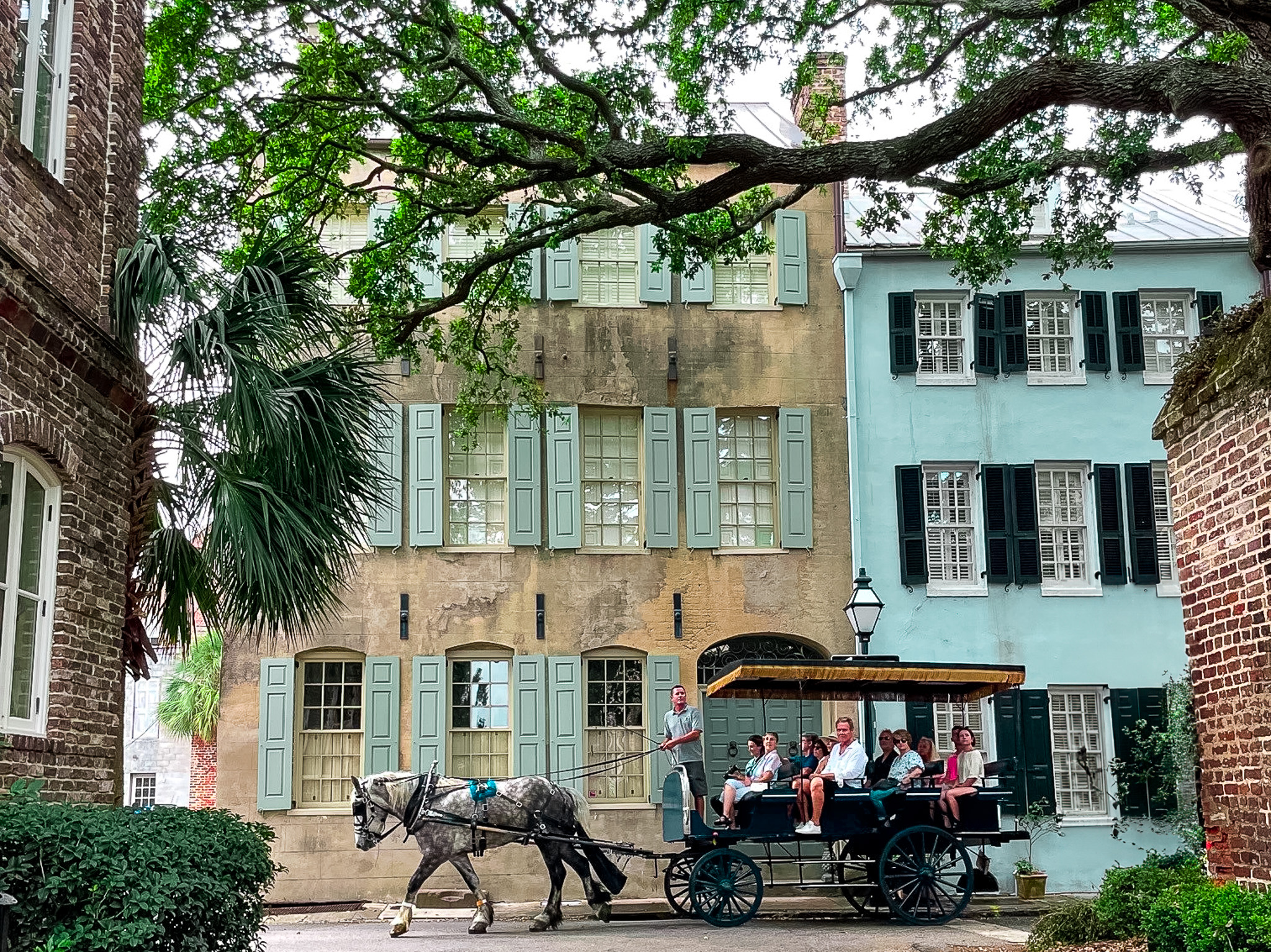
Some of Charleston’s most fascinating history lies along its narrowest streets.
Just a few blocks from King Street, Philadelphia Alley connects Church and State streets, its brick walls and shaded pathway recalling a time when the passage was known as Cow Alley. Later associated with Charleston’s dueling legends, it remains one of the city’s most intriguing shortcuts.
Farther south, Stoll’s Alley offers glimpses of wrought-iron gates, including work attributed to celebrated Charleston ironworker Philip Simmons. Nearby, Longitude Lane and Bedons Alley reveal another side of the historic district, where cobblestones, old brick buildings, and intimate passageways reflect the city’s early development.
These are places best discovered without rushing. Take a moment to notice the ironwork, weathered brick, and unexpected views that make even a short walk through Charleston feel like a journey into its past.
Explore More Hidden Passageways
For more historic lanes and their stories, browse our complete guide to Charleston’s alleys and secret passageways.
Step Inside Charleston's Historic Homes
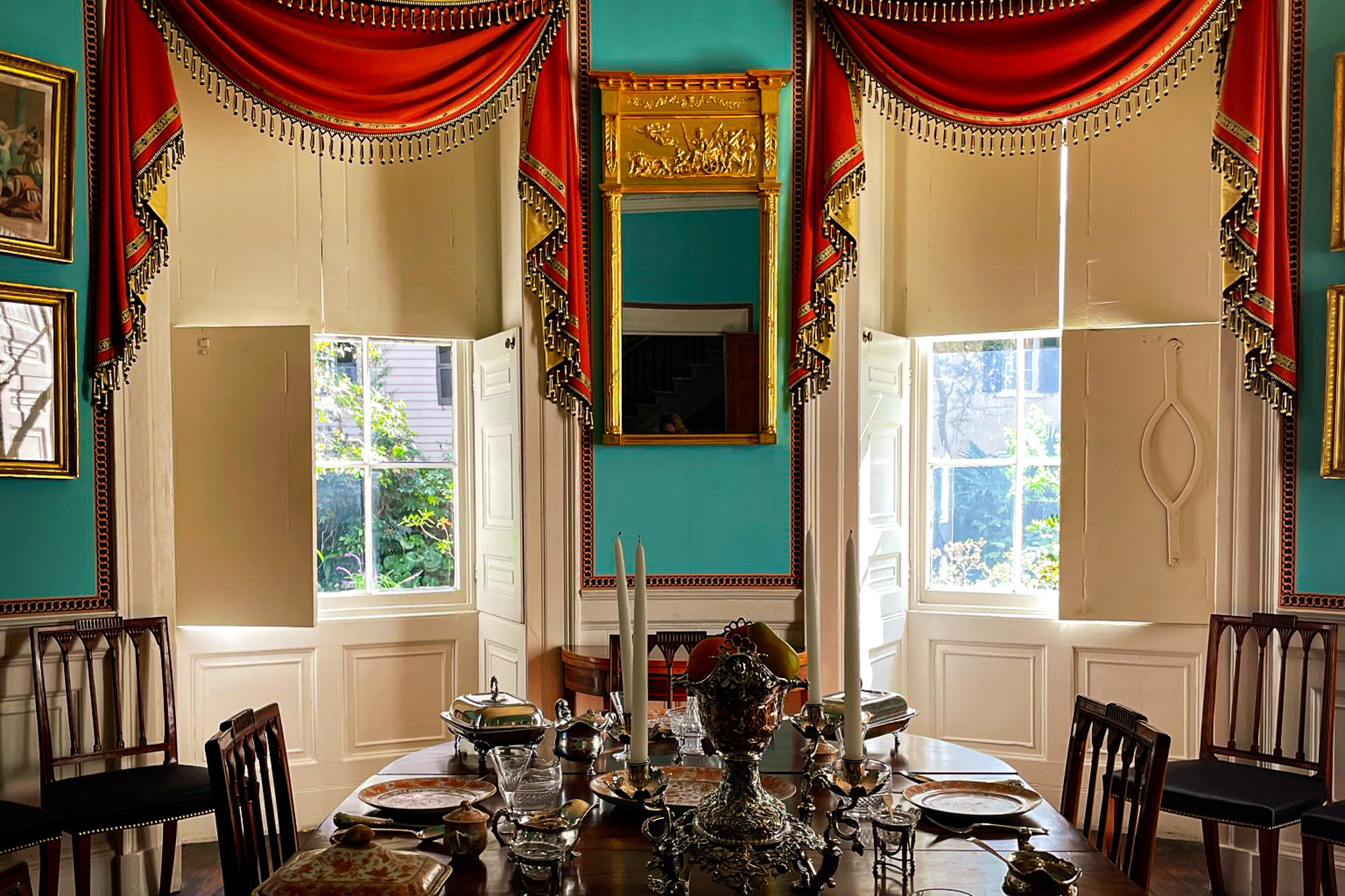
Charleston’s historic houses offer a closer look at the people, architecture, and traditions that shaped the city. Behind their elegant facades are stories of family life, craftsmanship, commerce, and the enslaved people whose labor sustained these households.
The Nathaniel Russell House on Meeting Street is celebrated for its grand three-story, free-flying staircase and beautifully restored Federal-style interiors. Overlooking Charleston Harbor, the Edmondston-Alston House offers a different perspective, with sweeping views of the Battery and rooms that reflect the lives of its 19th-century residents.
On Church Street, the Heyward-Washington House dates to the 1770s and is associated with Declaration of Independence signer Thomas Heyward Jr. Farther north, the Aiken-Rhett House preserves much of its historic fabric, including the spaces where enslaved people lived and worked, offering an important and more complete understanding of Charleston’s past.
Each house tells a different part of the city’s story, and several offer guided or self-guided tours that bring those histories into focus.
Explore More Historic Homes
Discover additional architectural landmarks and their stories in Charming Inns’ guide to Charleston’s historic homes.
Explore the Holy City's Historic Churches
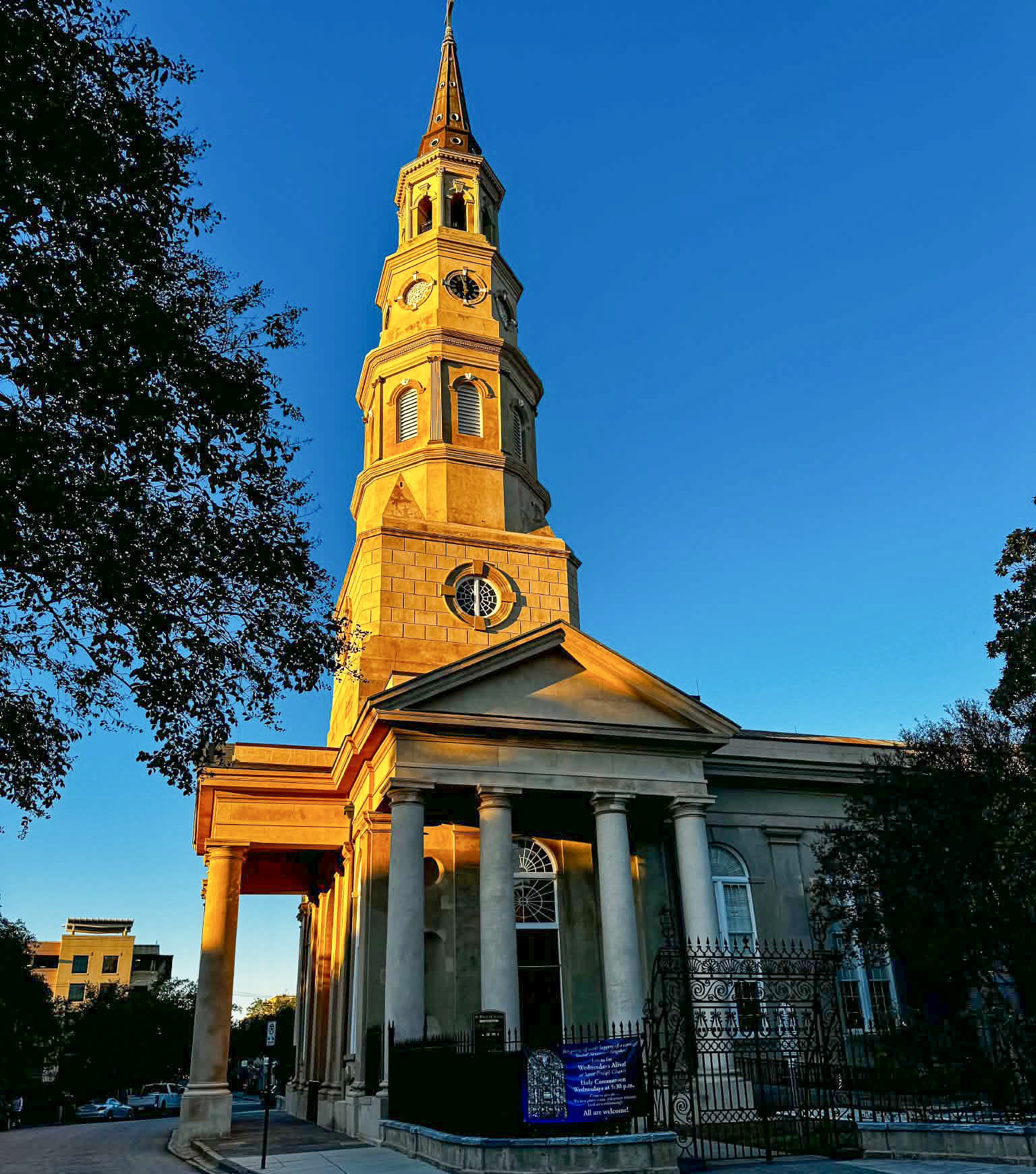
Charleston’s nickname, the Holy City, is often associated with the church steeples that have defined its skyline for centuries. Many of these historic places of worship remain active congregations, while their architecture and stories offer a glimpse into the city’s religious heritage.
At the corner of Broad and Meeting streets, St. Michael’s Church dates to the 1750s and is Charleston’s oldest surviving religious building. Its distinctive white steeple has long been a landmark in the historic district. Nearby, St. Philip’s Church stands along Church Street, where its imposing steeple rises above the surrounding rooftops.
The French Huguenot Church, with its Gothic Revival architecture and pale pink facade, reflects the influence of French Protestant settlers who arrived in Charleston during the colonial era. On Meeting Street, Circular Congregational Church is known for its unusual circular sanctuary and historic graveyard, where some of Charleston’s earliest surviving gravestones can be found.
Together, these landmarks reveal the architectural variety and religious traditions that have shaped Charleston over more than three centuries. Visitors are welcome to admire their exteriors, and some offer opportunities to explore inside when services and other activities permit.
Explore More Historic Churches
Discover additional places of worship and their stories in Charming Inns’ comprehensive guide to Charleston’s historic churches.
Follow the Gateway Walk
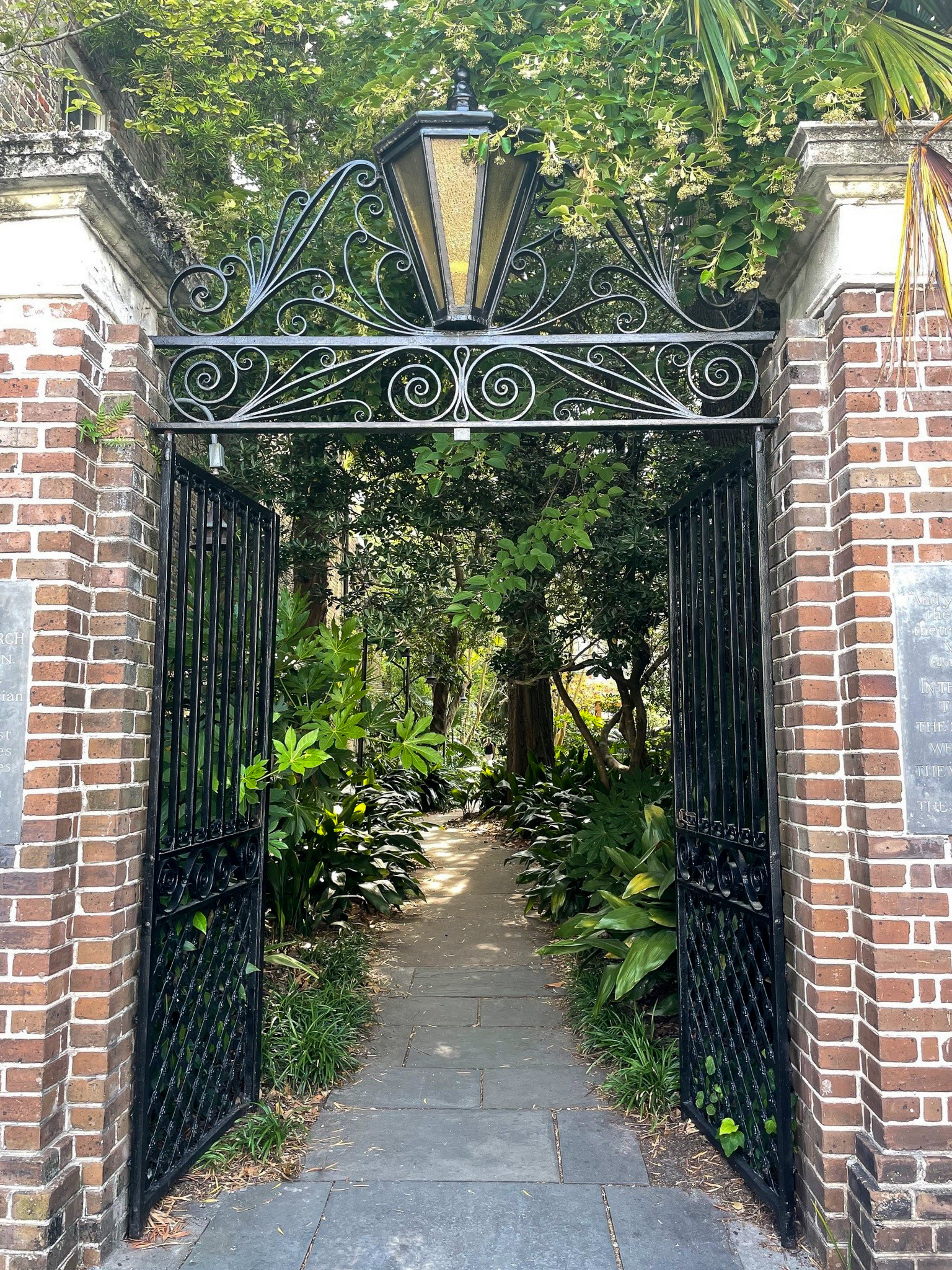
One of Charleston’s most distinctive walking experiences is found not along a single street, but through a series of historic churchyards, gardens, and wrought-iron gates.
Created in 1930 by the Garden Club of Charleston, the Gateway Walk was designed in part by landscape architect Loutrel W. Briggs. The route begins near St. John’s Lutheran Church on Clifford Street, crosses King and Meeting streets, and continues toward St. Philip’s Church.
Along the way, visitors pass through the atmospheric grounds of the Unitarian Church, discover garden spaces near the Gibbes Museum of Art, and wander among the historic gravestones of Circular Congregational Church. Each stretch offers a different perspective on Charleston’s architecture, gardens, and centuries of history.
The walk is especially rewarding for guests who enjoy exploring at their own pace. Look for the distinctive iron gates and take time to appreciate the details that might otherwise go unnoticed.
Plan Your Walk
Explore the Garden Club of Charleston’s Gateway Walk guide for more information about the route. Access to individual churchyards and garden gates may vary.
Discover Charleston's Architectural Details
In Charleston, some of the most memorable sights aren’t grand landmarks at all. They’re the smaller details that give the city’s historic streets their distinctive character.
Look for the Charleston single house, a narrow residence built with its shorter side facing the street and a long, shaded piazza extending along one side. Designed for the city’s climate and compact lots, these homes are especially common throughout the historic peninsula.
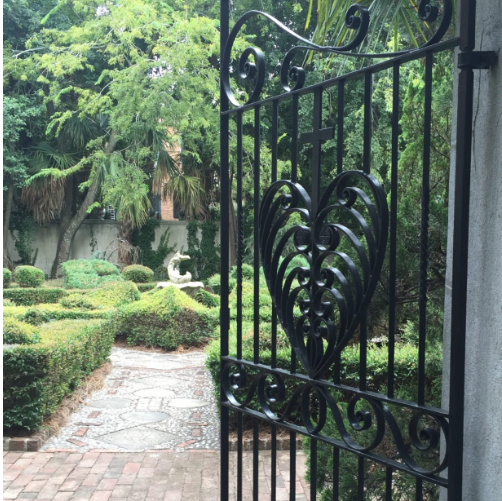
Charleston’s decorative ironwork is equally distinctive. Celebrated blacksmith Philip Simmons created hundreds of gates, fences, and railings across the city. His craftsmanship can be spotted at 2 St. Michael’s Alley, Stoll’s Alley, and the Philip Simmons Garden located behind Saint John’s Reformed Episcopal Church on Anson Street.
As you wander, notice the fanlights above doorways, colorful shutters, intricate window grilles, and garden gates that offer glimpses into Charleston’s private courtyards. Each detail contributes to the architectural character that makes the city so rewarding to explore on foot.
Learn More About Charleston’s Architecture
For guests who want to explore further, the College of Charleston also maintains an interactive map of Philip Simmons’ ironwork. Some pieces are on private properties, so visitors should admire them from public areas.

Return to a Historic Landmark on King Street
After exploring Charleston’s historic homes, hidden passageways, and architectural treasures, the history continues when you return to Kings Courtyard Inn.
Built in 1853 as the Blum Building, the Inn was designed by Charleston architect Francis D. Lee, who combined Greek Revival architecture with distinctive Egyptian-inspired details. Originally home to shops on the ground floor and hotel accommodations above, the building has witnessed more than 170 years of change along King Street.
During its restoration in 1983, two original light wells were transformed into the Lion’s Head and Pineapple Courtyards. Today, these spaces, together with the Tabby Courtyard, offer guests a chance to enjoy a different side of Charleston’s architectural heritage.
Settle in beside a fountain, enjoy afternoon wine and hors d’oeuvres, or simply admire the historic details that make the Inn part of the city’s story.
Discover the History of Kings Courtyard Inn
Learn more about our historic building and its transformation through the years, or explore the three courtyards tucked within the Inn.
Frequently Asked Questions About Charleston's Historic Places.
The Nathaniel Russell House, Edmondston-Alston House, Heyward-Washington House, and Aiken-Rhett House are excellent choices. Each offers a different perspective on Charleston’s architecture and history, from elegant interiors to the lives of the enslaved people who maintained these households.
Yes. Kings Courtyard Inn is located on King Street in Charleston’s historic district, within walking distance of many notable homes, churches, and hidden alleys. Guests can explore much of the historic peninsula without needing a car.
Philadelphia Alley, Stoll’s Alley, Longitude Lane, and Bedons Alley are among the city’s most interesting historic passageways. Most are located east of Meeting Street, making them easy to incorporate into a walking tour.
The Gateway Walk is a historic pedestrian route created by the Garden Club of Charleston in 1930. It connects several churchyards and garden spaces between Archdale Street and the area near St. Philip’s Church. Access to individual sections may vary.
Charleston is known as the Holy City partly because of its many historic churches and prominent steeples. The nickname also reflects the city’s long history of religious congregations, although that history includes periods when religious freedom and equality were not extended to everyone.
Many of Charleston’s historic churches remain active places of worship. Some welcome visitors during designated hours or offer tours, while others have limited access. Check each church’s official website before planning an interior visit.
Continue Exploring Charleston
Every stay at Kings Courtyard Inn offers an opportunity to discover another side of Charleston. Explore our collection of curated guides for insider recommendations, local favorites, and memorable experiences throughout the Holy City.
